Aptitude · Model exam · Unofficial

Grade 12 Aptitude model exam — timed practice

Sit an unofficial Grade 12 Aptitude model exam online. Abrari times subject practice from its own bank — not a Ministry model paper, not a leaked PDF, and not an official sitting.

How to sit this model exam

  • Start subject practice in the browser, then keep the clock on when you want a timed drill. Sign in to save a sitting.
  • Or open the full-stream timed mock (Natural or Social) and take this subject as part of that sitting. The first full sitting is complimentary.
  • Read a sample of unofficial questions on this page, then practise the rest. Answers are Abrari keys.

Start Aptitude timed practice · Full-stream timed mock (Natural) · Aptitude questions and answers

Sample questions

Unofficial stems from the Abrari bank, with answers and explanations inside each item.

Q55 · counting-figures

How many triangles are there in the diagram?
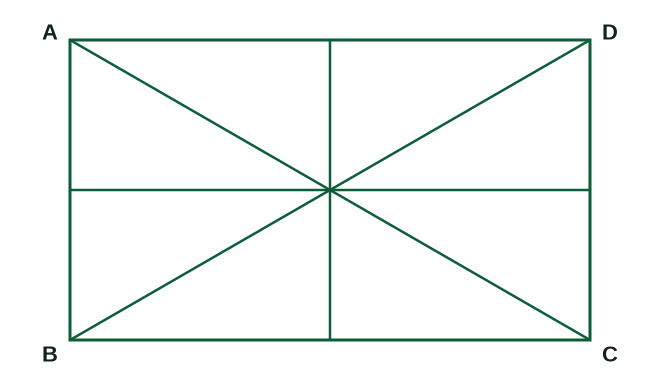
Figure for question 55 from the exam paper
  1. A. 14
  2. B. 18
  3. C. 12
  4. D. 16
Worked solutionUnofficial

Answer: D

Call the centre O. The 8 lines from O to the corners and side midpoints cut the rectangle into 8 small triangles.

Two neighbouring small triangles that share a side midpoint make a larger triangle with a full side of the rectangle as base: △OAD\triangle OAD, △ODC\triangle ODC, △OCB\triangle OCB, △OBA\triangle OBA. That is 4.

Each diagonal cuts the rectangle into 2 half-triangles: △ABD\triangle ABD, △BCD\triangle BCD, △ABC\triangle ABC, △ACD\triangle ACD. That is 4.

No other three lines form a triangle (the midlines are parallel to the sides).

Total: 8+4+4=168 + 4 + 4 = 16.

Answer: D.

Why not A/B/C?

  • A. 14 misses two triangles, for example two of the four half-rectangle triangles.
  • B. 18 counts two shapes that are not triangles, such as the quadrilaterals formed at the corners.
  • C. 12 counts only the 8 small triangles and the 4 half-rectangle triangles, missing the 4 triangles on the sides of the rectangle.

Unofficial — solved by Abrari, not an official EAES key.
Practice this subject

Q58 · data-interpretation

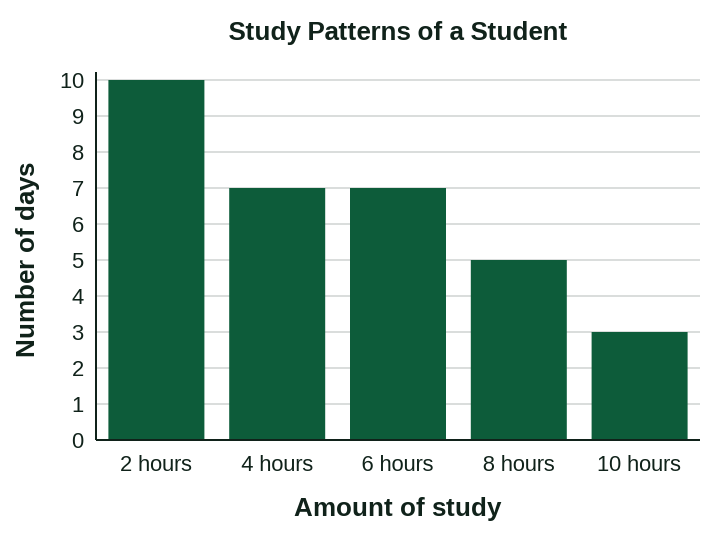
Use the following information: a bar graph shows the data of a student's study pattern recorded for 32 days. How many days did the student study less than 8 hours?
Figure for question 58 from the exam paper
  1. A. 6
  2. B. 18
  3. C. 12
  4. D. 24
Worked solutionUnofficial

Answer: D

Read the bars: 2 h → 10 days, 4 h → 7, 6 h → 7, 8 h → 5, 10 h → 3 (total 3232).

'Less than 8 hours' means 2, 4 or 6 hours (8 hours itself is not included).

10+7+7=24 days10 + 7 + 7 = 24 \text{ days}

Answer: D.

Why not A/B/C?

  • A. 6 is far too small; even the 2-hour bar alone is 10 days.
  • B. 18 is too small. It would come from misreading a bar, for example taking the 2-hour bar as 4 instead of 10; the three bars below 8 hours add to 24.
  • C. 12 is too small. It may come from wrongly counting only some of the bars; 10+7+7=2410+7+7=24.

Unofficial — solved by Abrari, not an official EAES key.

Practice this subject

Q59 · data-interpretation

Use the bar graph (student's study pattern over 32 days). Which time in hours is the median amount of the study?
Figure for question 59 from the exam paper
  1. A. 2
  2. B. 6
  3. C. 4
  4. D. 8
Worked solutionUnofficial

Answer: C

There are 32 days, an even number, so the median is the average of the 16th and 17th values in order.

In order: days 1–10 are 2 h, days 11–17 are 4 h, days 18–24 are 6 h, days 25–29 are 8 h, and days 30–32 are 10 h.

The 16th and 17th values are both 4 h, so

median=4+42=4 hours\text{median} = \frac{4+4}{2} = 4 \text{ hours}

Answer: C.

Why not A/B/D?

  • A. 2 hours is the mode (the tallest bar), not the median.
  • B. 6 hours is the middle category of the five labels; the median must be found by counting days, not categories.
  • D. 8 hours is far above the middle; only 8 of the 32 days are at 8 hours or more.

Unofficial — solved by Abrari, not an official EAES key.

Practice this subject

Q60 · data-interpretation

Use the bar graph (student's study pattern over 32 days). How many days did the student study more than the average amount of the study?
Figure for question 60 from the exam paper
  1. A. 8
  2. B. 5
  3. C. 15
  4. D. 17
Worked solutionUnofficial

Answer: C

Mean study time:

xˉ=2(10)+4(7)+6(7)+8(5)+10(3)32=20+28+42+40+3032=16032=5 h\bar{x} = \frac{2(10) + 4(7) + 6(7) + 8(5) + 10(3)}{32} = \frac{20+28+42+40+30}{32} = \frac{160}{32} = 5 \text{ h}

Days with more than 5 hours are the 6 h, 8 h and 10 h bars:

7+5+3=15 days7 + 5 + 3 = 15 \text{ days}

Answer: C.

Why not A/B/D?

  • A. 8 counts only the 8 h and 10 h bars (5+35+3) and leaves out the 6-hour days, which are also above the 5 h mean.
  • B. 5 is the mean itself (5 hours), not a number of days.
  • D. 17 counts the days at or below 4 hours (10+710+7), which is the wrong side of the mean.

Unofficial — solved by Abrari, not an official EAES key.

Practice this subject

Q55 · Quantitative - Geometry (count triangles)

How many triangles are there in the diagram?
Figure for question 55 from the exam paper
  1. A. 14
  2. B. 18
  3. C. 12
  4. D. 16
Worked solutionUnofficial

Answer: D

Call the centre O. The 8 lines from O to the corners and side midpoints cut the rectangle into 8 small triangles.

Two neighbouring small triangles that share a side midpoint make a larger triangle with a full side of the rectangle as base: △OAD\triangle OAD, △ODC\triangle ODC, △OCB\triangle OCB, △OBA\triangle OBA. That is 4.

Each diagonal cuts the rectangle into 2 half-triangles: △ABD\triangle ABD, △BCD\triangle BCD, △ABC\triangle ABC, △ACD\triangle ACD. That is 4.

No other three lines form a triangle (the midlines are parallel to the sides).

Total: 8+4+4=168 + 4 + 4 = 16.

Answer: D.

Why not A/B/C?

  • A. 14 misses two triangles, for example two of the four half-rectangle triangles.
  • B. 18 counts two shapes that are not triangles, such as the quadrilaterals formed at the corners.
  • C. 12 counts only the 8 small triangles and the 4 half-rectangle triangles, missing the 4 triangles on the sides of the rectangle.

Unofficial — solved by Abrari, not an official EAES key.

Practice this subject

Q58 · Quantitative - Bar graph interpretation

How many days did the student study less than 8 hours?
Figure for question 58 from the exam paper
  1. A. 6
  2. B. 18
  3. C. 12
  4. D. 24
Worked solutionUnofficial

Answer: D

Read the bars: 2 h → 10 days, 4 h → 7, 6 h → 7, 8 h → 5, 10 h → 3 (total 3232).

'Less than 8 hours' means 2, 4 or 6 hours (8 hours itself is not included).

10+7+7=24 days10 + 7 + 7 = 24 \text{ days}

Answer: D.

Why not A/B/C?

  • A. 6 is far too small; even the 2-hour bar alone is 10 days.
  • B. 18 is too small. It would come from misreading a bar, for example taking the 2-hour bar as 4 instead of 10; the three bars below 8 hours add to 24.
  • C. 12 is too small. It may come from wrongly counting only some of the bars; 10+7+7=2410+7+7=24.

Unofficial — solved by Abrari, not an official EAES key.

Practice this subject

Q59 · Quantitative - Bar graph interpretation

Which time in hours is the median amount of the study?
Figure for question 59 from the exam paper
  1. A. 2
  2. B. 6
  3. C. 4
  4. D. 8
Worked solutionUnofficial

Answer: C

There are 32 days, an even number, so the median is the average of the 16th and 17th values in order.

In order: days 1–10 are 2 h, days 11–17 are 4 h, days 18–24 are 6 h, days 25–29 are 8 h, and days 30–32 are 10 h.

The 16th and 17th values are both 4 h, so

median=4+42=4 hours\text{median} = \frac{4+4}{2} = 4 \text{ hours}

Answer: C.

Why not A/B/D?

  • A. 2 hours is the mode (the tallest bar), not the median.
  • B. 6 hours is the middle category of the five labels; the median must be found by counting days, not categories.
  • D. 8 hours is far above the middle; only 8 of the 32 days are at 8 hours or more.

Unofficial — solved by Abrari, not an official EAES key.

Practice this subject

Q60 · Quantitative - Bar graph interpretation

How many days did the student study more than the average amount of the study?
Figure for question 60 from the exam paper
  1. A. 8
  2. B. 5
  3. C. 15
  4. D. 17
Worked solutionUnofficial

Answer: C

Mean study time:

xˉ=2(10)+4(7)+6(7)+8(5)+10(3)32=20+28+42+40+3032=16032=5 h\bar{x} = \frac{2(10) + 4(7) + 6(7) + 8(5) + 10(3)}{32} = \frac{20+28+42+40+30}{32} = \frac{160}{32} = 5 \text{ h}

Days with more than 5 hours are the 6 h, 8 h and 10 h bars:

7+5+3=15 days7 + 5 + 3 = 15 \text{ days}

Answer: C.

Why not A/B/D?

  • A. 8 counts only the 8 h and 10 h bars (5+35+3) and leaves out the 6-hour days, which are also above the 5 h mean.
  • B. 5 is the mean itself (5 hours), not a number of days.
  • D. 17 counts the days at or below 4 hours (10+710+7), which is the wrong side of the mean.

Unofficial — solved by Abrari, not an official EAES key.

Practice this subject

Grade 12 national exam · Model exam questions · 2016 E.C. all subjects · 2017 E.C. all subjects · 2018 E.C. all subjects · All past papers · Practice online

Frequently asked questions

Is this an official Grade 12 Aptitude model exam?
No. Abrari model tests are unofficial practice. They are not an official EAES, NEAEA, or Ministry model exam and they are not leaked papers.
Is this a PDF?
No. The questions live as HTML on this site so you can practise online. Abrari does not offer a model-exam PDF download.
How is this different from a past-paper page?
A past-paper page follows one year. This model-exam page is timed practice you sit now, using unofficial bank items for the subject.