Q1 · Polymers / step-growth
- A. Polyester
- B. PTFE
- C. Polystyrene
- D. PVC
Worked solutionUnofficial
Unofficial keyed letter A. A full worked solution is not published for this item yet.
Unofficial — solved by Abrari, not an official EAES key.
Chemistry · Entrance exam Q&A · Unofficial
Unofficial Grade 12 Chemistry entrance exam questions from the Abrari study bank. 281 reviewed items across 2018 E.C., 2017 E.C., 2016 E.C., 2015 E.C. are in this subject. A sample with unofficial answers and explanations is on this page — practise the rest online. Not a government paper.
281 unofficial Chemistry questions in the public bank
Unofficial stems, answers, and explanations from the Abrari bank. Years use the Ethiopian calendar.
Q1 · Polymers / step-growth
Unofficial keyed letter A. A full worked solution is not published for this item yet.
Unofficial — solved by Abrari, not an official EAES key.
Q2 · Polymers / thermoplastics
Unofficial keyed letter C. A full worked solution is not published for this item yet.
Unofficial — solved by Abrari, not an official EAES key.
Q3 · Polymers / addition polymers
Unofficial keyed letter A. A full worked solution is not published for this item yet.
Unofficial — solved by Abrari, not an official EAES key.
Q4 · Polymers / trade names
Unofficial keyed letter C. A full worked solution is not published for this item yet.
Unofficial — solved by Abrari, not an official EAES key.
Q5 · Polymers / uses
Unofficial keyed letter D. A full worked solution is not published for this item yet.
Unofficial — solved by Abrari, not an official EAES key.
Q6 · Polymers / monomers
Unofficial keyed letter D. A full worked solution is not published for this item yet.
Unofficial — solved by Abrari, not an official EAES key.
Q7 · Organic chemistry / esterification
Unofficial keyed letter C. A full worked solution is not published for this item yet.
Unofficial — solved by Abrari, not an official EAES key.
Q8 · Hydrocarbons / reactivity
Unofficial keyed letter A. A full worked solution is not published for this item yet.
Unofficial — solved by Abrari, not an official EAES key.
Q9 · Alcohols / oxidation
Unofficial keyed letter B. A full worked solution is not published for this item yet.
Unofficial — solved by Abrari, not an official EAES key.
Q10 · Metallurgy / ore concentration
Unofficial keyed letter A. A full worked solution is not published for this item yet.
Unofficial — solved by Abrari, not an official EAES key.
10 of 67 unofficial 2018 E.C. questions on this page.
All 2018 E.C. stems: 2018 E.C. Chemistry (67)
Unofficial stems, answers, and explanations from the Abrari bank. Years use the Ethiopian calendar.
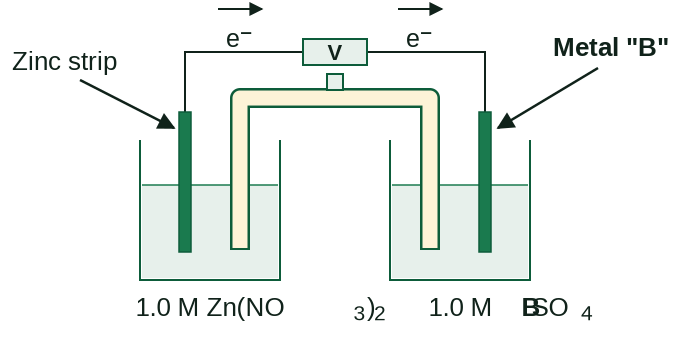
Q2 · Electrochemistry / cell potential
Answer: D
Electrons leave the zinc strip and travel to metal B. So zinc is oxidised (it is the anode) and is reduced at B (the cathode).
Answer: D.
Why not A/B/C?
Unofficial — solved by Abrari, not an official EAES key.
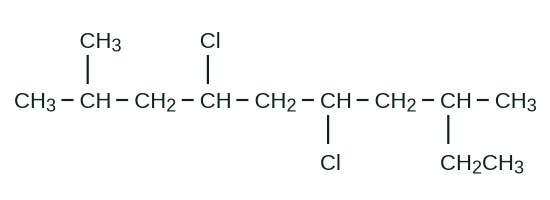
Q75 · Organic chemistry / IUPAC nomenclature
Answer: A
First find the longest chain. The written chain has 9 carbons, but going into the ethyl group at the last CH gives carbons, so the parent is decane. With that chain, the CH3 written at the right end becomes a methyl branch. Number from the left: substituents on C2 (methyl), C4 (Cl), C6 (Cl), C8 (methyl), giving locants . Numbering from the ethyl end gives , which is higher, so use the left-to-right numbering. List substituents alphabetically (chloro before methyl):
Answer: A.
Why not B/C/D?
Unofficial — solved by Abrari, not an official EAES key.
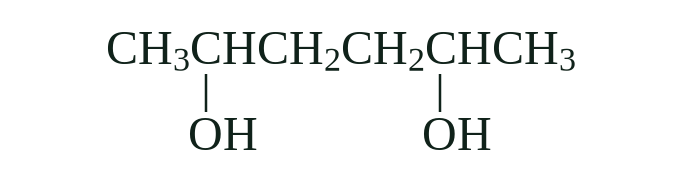
Q77 · Organic chemistry / alcohols
Answer: C
Count the –OH groups in the structure: there is one on carbon 2 and one on carbon 5, so there are two. Alcohols are grouped by how many –OH groups they have: one is monohydric, two is dihydric (a diol), three or more is polyhydric. With two –OH groups this molecule (hexane-2,5-diol) is a dihydric alcohol. Each –OH carbon is bonded to two other carbons, so each OH is secondary, not primary or tertiary. Answer: C.
Why not A/B/D?
Unofficial — solved by Abrari, not an official EAES key.
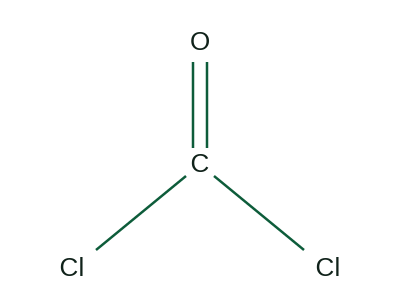
Q78 · VSEPR / bond angles
Answer: C
Carbon has three bonding domains and no lone pairs, so the shape is trigonal planar. The ideal angle would be .
The C=O double bond has more electron density than a single bond, so it repels the C-Cl bonds more strongly.
This pushes the two C-Cl bonds closer together. So Cl-C-Cl becomes less than (about ), and each Cl-C-O becomes more than (about ).
Answer: C.
Why not A/B/D?
Unofficial — solved by Abrari, not an official EAES key.
Q1 · Industrial chemistry / glass
Unofficial keyed letter B. A full worked solution is not published for this item yet.
Unofficial — solved by Abrari, not an official EAES key.
Q3 · Polymers
Unofficial keyed letter C. A full worked solution is not published for this item yet.
Unofficial — solved by Abrari, not an official EAES key.
Q4 · Industrial chemistry / catalysts
Unofficial keyed letter D. A full worked solution is not published for this item yet.
Unofficial — solved by Abrari, not an official EAES key.
Q5 · Reaction rate / factors
Unofficial keyed letter A. A full worked solution is not published for this item yet.
Unofficial — solved by Abrari, not an official EAES key.
Q8 · Atomic structure / EM radiation
Unofficial keyed letter B. A full worked solution is not published for this item yet.
Unofficial — solved by Abrari, not an official EAES key.
Q9 · Atomic structure / energy transitions
Unofficial keyed letter D. A full worked solution is not published for this item yet.
Unofficial — solved by Abrari, not an official EAES key.
10 of 70 unofficial 2017 E.C. questions on this page.
All 2017 E.C. stems: 2017 E.C. Chemistry (70)
Unofficial stems, answers, and explanations from the Abrari bank. Years use the Ethiopian calendar.
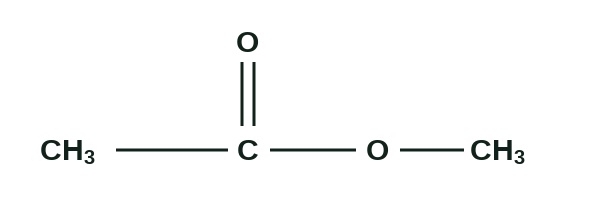
Q6 · Ester nomenclature
Answer: A
The structure is an ester, .
The acid part is , which has 2 carbons, so it comes from ethanoic acid and is named ethanoate.
The group joined to the single-bonded O is , which is methyl.
An ester is named alkyl first, then the acid part with '-oate': methyl ethanoate ().
Answer: A.
Why not B/C/D?
Unofficial — solved by Abrari, not an official EAES key.
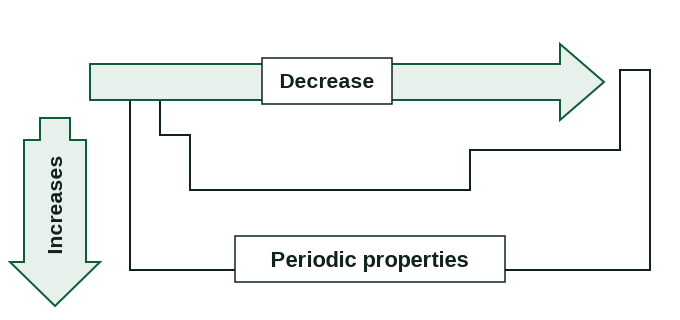
Q32 · Periodic trends
Answer: D
The chart shows a property that gets smaller across a period and larger down a group. Across a period, nuclear charge rises while electrons enter the same shell, so the electrons are pulled closer and atoms get smaller. Down a group, each element adds a new shell, so atoms get larger. That is exactly the trend for atomic radius. Electronegativity, electron affinity and ionization energy all follow the opposite pattern: they generally increase across a period and decrease down a group.
Answer: D.
Why not A/B/C?
Unofficial — solved by Abrari, not an official EAES key.
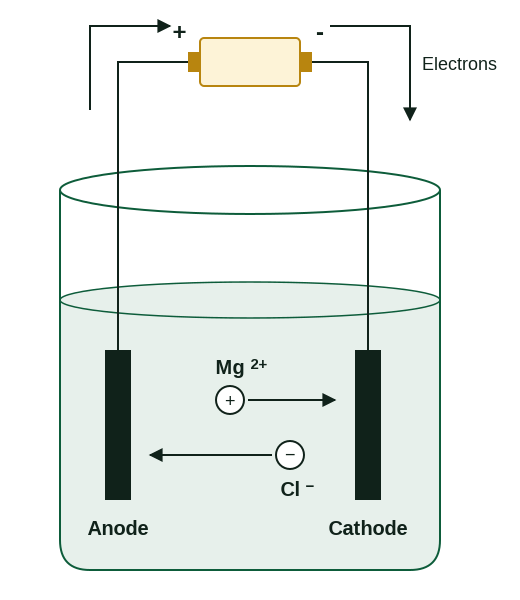
Q57 · Electrolytic cells
Answer: C
This is the electrolysis of MgCl₂ (Mg²⁺ and Cl⁻ ions). At the cathode (−), Mg²⁺ gains electrons: At the anode (+), Cl⁻ loses electrons: Mg²⁺ is reduced, so it takes electrons from another species; that makes it the oxidizing agent. In every cell, oxidation happens at the anode and reduction at the cathode, so A and B are false. Chlorine's oxidation number rises from −1 to 0, so D is false. Answer: C.
Why not A/B/D?
Unofficial — solved by Abrari, not an official EAES key.
Q1 · Hydrocarbons
Unofficial keyed letter A. A full worked solution is not published for this item yet.
Unofficial — solved by Abrari, not an official EAES key.
Q2 · Preparation of alkenes
Unofficial keyed letter D. A full worked solution is not published for this item yet.
Unofficial — solved by Abrari, not an official EAES key.
Q4 · Crude oil
Unofficial keyed letter D. A full worked solution is not published for this item yet.
Unofficial — solved by Abrari, not an official EAES key.
Q5 · Carboxylic acids
Unofficial keyed letter C. A full worked solution is not published for this item yet.
Unofficial — solved by Abrari, not an official EAES key.
Q7 · Significant figures
Unofficial keyed letter C. A full worked solution is not published for this item yet.
Unofficial — solved by Abrari, not an official EAES key.
Q8 · Lewis structures
Unofficial keyed letter D. A full worked solution is not published for this item yet.
Unofficial — solved by Abrari, not an official EAES key.
Q9 · Solubility
Unofficial keyed letter D. A full worked solution is not published for this item yet.
Unofficial — solved by Abrari, not an official EAES key.
10 of 70 unofficial 2016 E.C. questions on this page.
All 2016 E.C. stems: 2016 E.C. Chemistry (70)
Unofficial stems, answers, and explanations from the Abrari bank. Years use the Ethiopian calendar.
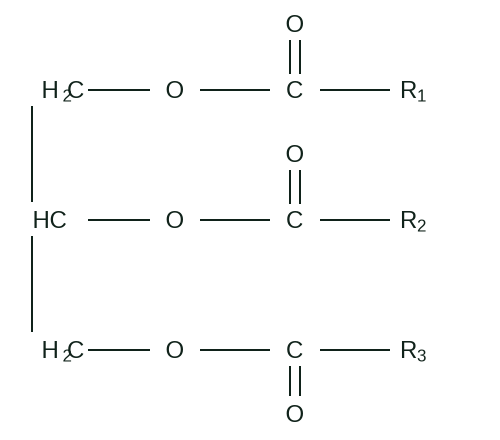
Q17 · Organic chemistry / functional groups
Answer: B
The backbone with an O on each carbon comes from glycerol, a triol. Each O is bonded to a that carries a hydrocarbon group R, so each link is an ester group . A molecule made of glycerol joined to three fatty-acid chains by ester bonds is a triglyceride (triacylglycerol). Triglycerides are fats (and oils).
Answer: B.
Why not A/C/D?
Unofficial — solved by Abrari, not an official EAES key.
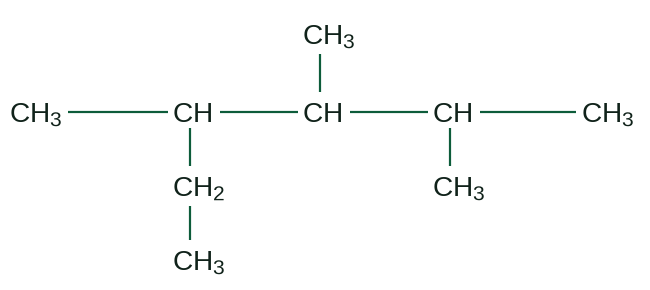
Q60 · Organic nomenclature (structure)
Answer: D
First find the longest chain. Start at the end of the ethyl group: CH3-CH2-CH-CH-CH-CH3 is 6 carbons, which is longer than the 5-carbon row as written. So the parent is hexane.
The left CH3 of the row is now a branch, and the other two CH3 groups are also branches. That gives three methyl groups.
Number the chain from the end nearer the branches, which is the right-hand CH3. The methyls are then on C2, C3 and C4. Numbering from the other end gives 3, 4, 5, which is higher.
Answer: D.
Why not A/B/C?
Unofficial — solved by Abrari, not an official EAES key.
Q1 · Chemical kinetics / equilibrium
Unofficial keyed letter D. A full worked solution is not published for this item yet.
Unofficial — solved by Abrari, not an official EAES key.
Q2 · Vapor pressure / boiling point
Unofficial keyed letter B. A full worked solution is not published for this item yet.
Unofficial — solved by Abrari, not an official EAES key.
Q3 · Chemical equilibrium / Le Chatelier
Unofficial keyed letter A. A full worked solution is not published for this item yet.
Unofficial — solved by Abrari, not an official EAES key.
Q4 · Chemical bonding / molecular orbital
Unofficial keyed letter B. A full worked solution is not published for this item yet.
Unofficial — solved by Abrari, not an official EAES key.
Q5 · Organic chemistry / esterification
Unofficial keyed letter C. A full worked solution is not published for this item yet.
Unofficial — solved by Abrari, not an official EAES key.
Q6 · Redox reactions
Unofficial keyed letter B. A full worked solution is not published for this item yet.
Unofficial — solved by Abrari, not an official EAES key.
Q7 · Laws of chemical combination
Unofficial keyed letter D. A full worked solution is not published for this item yet.
Unofficial — solved by Abrari, not an official EAES key.
Q8 · Chemical equilibrium principles
Unofficial keyed letter D. A full worked solution is not published for this item yet.
Unofficial — solved by Abrari, not an official EAES key.
10 of 74 unofficial 2015 E.C. questions on this page.
All 2015 E.C. stems: 2015 E.C. Chemistry (74)
Practise the rest of Chemistry online · Chemistry model exam · All Chemistry papers
Grade 12 national exam · Model exam questions · 2016 E.C. all subjects · 2017 E.C. all subjects · 2018 E.C. all subjects · All past papers · Practice online